Back to the Main page
Compensation Management Platform
Overview
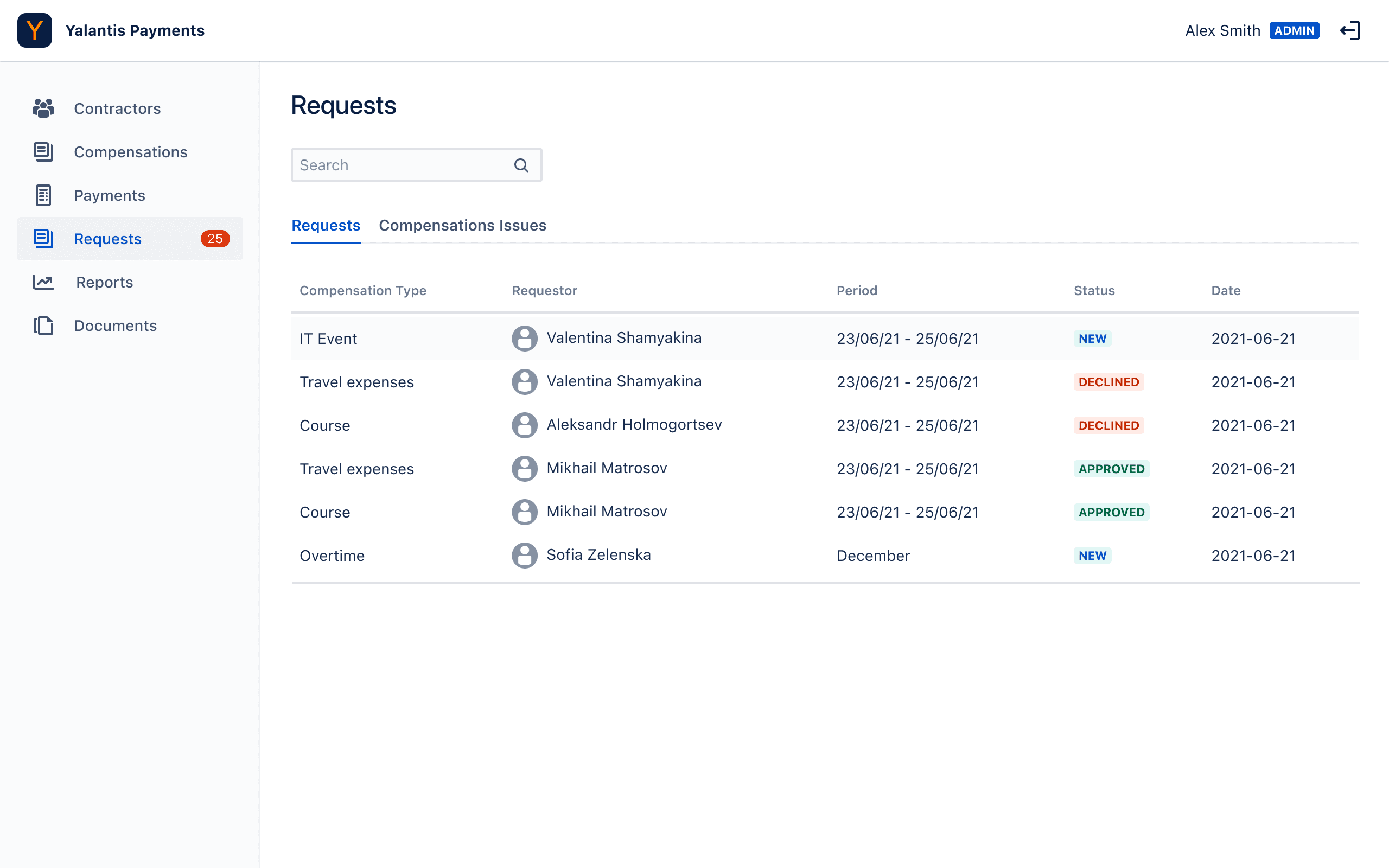
The project aimed to streamline and automate compensation-related workflows for the finance department. Accountants were burdened by fragmented systems, including Excel spreadsheets, Word documents, and various standalone tools, which led to inefficiencies, calculation errors, and delays. Our goal was to design an internal compensation management platform that would centralize these processes, increase operational efficiency, and reduce cognitive load on finance personnel.
Timeframe: 6 months
Team: UX Designer2 Front-End Developers, 1 Back-End Developer, QA, PM, Financial Director, Accountant
Platform: Web App
Industry: SaaS, B2B
My Role & Collaboration
As a UX Designer I played a pivotal role in:
Facilitating stakeholder alignment by organizing cross-functional workshops with developers, PMs, QA teams, and non-technical stakeholders
Advocating for UX decisions based on user research and usability testing data
Interviewing and usability testing.
Balancing user needs with technical feasibility by working closely with engineers to ensure design feasibility
Maintaining the design system to ensure consistency across the platform and streamline future iterations
Challenge
Accountants faced persistent challenges in processing and calculating compensation data due to the reliance on multiple disconnected tools and the lack of standardized workflows. The complexity of approvals, reimbursements, and day-off requests further exacerbated the situation. The organization’s internal processes were overly complicated and error-prone, leading to inefficiencies and frustration across the finance department.
The objective was to develop a platform that simplifies compensation workflows, enhances data accuracy, reduces manual effort, and aligns with internal process requirements—all within a limited timeline and budget.
Research Insights
User interviews
I initiated discovery interviews with accountants and department heads to uncover pain points and understand the existing workflow in detail. I focused on:
The approval model and its bottlenecks
Current compensation calculation methods
Document handling and manual processes
Organizational structure and communication flows
The findings revealed that:
Compensation calculation was highly manual and time-consuming
Approval chains were unclear and inconsistent
Reimbursement and time-off request management lacked traceability
Design System Recommendation
Given the internal nature of the product and the need for rapid, cost-effective delivery, I recommended using the Atlassian Design System (ADS) to accelerate development, ensure UI consistency, and reduce design overhead.
Problem Statement
Accountants in the organization struggle with fragmented compensation workflows involving multiple disconnected tools, leading to inefficiencies, errors, and delays. There is a critical need for an integrated platform that simplifies compensation calculations, standardizes approvals, and streamlines related processes such as reimbursements and leave requests to improve accuracy, accountability, and operational efficiency.
Impact
The primary success metric for the MVP was:
Reduction in average time to complete compensation calculations for a single employee
Other qualitative and quantitative indicators included:
Decrease in errors and rework due to manual input
Improved satisfaction among accountants during internal surveys
Adoption rate within the first two months after launch
Key Outcomes
Streamlined and centralized compensation workflow
Clear approval hierarchies with configurable logic
Automated handling of reimbursements and day-off requests
Enhanced cross-departmental transparency and accountability
Later this internal product became external
Lessons Learned
Engaging accountants early in the process ensured alignment with real needs, not just assumptions
Using a pre-built design system accelerated delivery without compromising usability
Internal tools benefit greatly from business-embedded UX research
Next steps
Monitor platform usage and gather feedback for future enhancements
Expand the feature set to include performance bonuses and salary forecasting tools
Integrate with external accounting software for streamlined financial reporting